


What Comes After a Yoga Teacher Training? How to Integrate
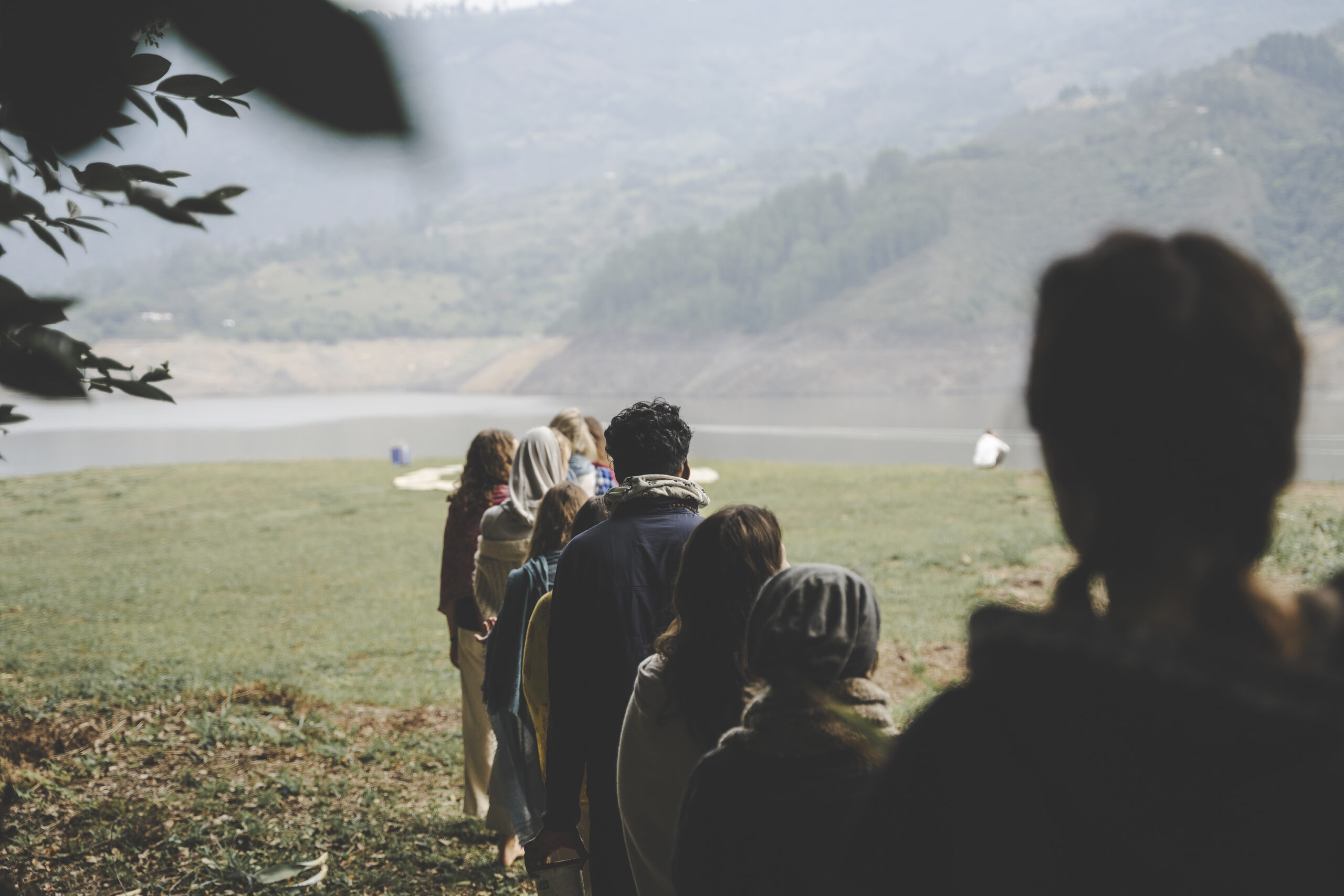
You have completed your yoga teacher training. You feel open, inspired, maybe even transformed. And then everyday life begins again. This is exactly where many people lose their practice and their inner balance. Not because they lack motivation, but because no one showed them how to truly integrate what they learned into daily life. This article is about what really happens after a YTT, and how to stay connected to the path that has just opened for you.
The Real Training Begins After the Yoga Teacher Training
After my first 200-hour yoga teacher training, I felt deeply inspired and ready for a new beginning. It was almost like being in a state of exhilaration, carried by the experience of how alive my body could feel and by the mental clarity I had gained.
So let’s go, I thought. Once I got back to Berlin, I wanted to start teaching right away. But that did not happen. Reality brought me back down to earth very quickly. I had not yet gained enough experience to truly be accepted as a teacher. At the same time, I had to earn a living. The stress, the pace, and the intensity of city life did the rest.
Slowly, I began to neglect my practice. I slipped back into old patterns and started to feel dull, unmotivated, and inwardly heavy again, almost like I had before the training. It did not take long for my newfound clarity to turn into tension, frustration, and resentment. From a high into a low.
This experience is far from unusual. Many graduates go through something similar after a yoga teacher training. Many of our former students have shared exactly this with us as well. So the question is: what is really behind it?
Why Integration After a Yoga Teacher Training Is So Challenging
A yoga teacher training almost inevitably creates a unique kind of atmosphere. Many things are taken care of. Meals are prepared, the daily rhythm is structured, you are surrounded by like-minded people, you form deep bonds, and you spend many hours each day doing something that feels meaningful and nourishing.
Of course, this is not the reality most of us come from. A training is a protected space. It is a powerful field for self-inquiry and practice. But that space does not remain forever.
Once we return to daily life, all the things we cannot simply ignore are waiting again: work, responsibilities, relationships, exhaustion, overwhelm, distraction. Suddenly, there seems to be very little time left for yoga, breathwork, or mindfulness. And this is exactly when the yoga house we freshly built begins to collapse, if its foundation was not built strongly enough.
Hardly anyone speaks about post-training integration. Yet it is essential if an intense experience is to become a lived practice. The real training only begins after the yoga teacher training.
What Can Happen After a Yoga Teacher Training
Before I go into concrete ways of integrating, it is worth taking an honest look at the possible challenges and low points that may arise after the training.
I would like to share two examples from former students in order to show different perspectives.
E. recently shared with us:
“After I finished my incredible course at Lake Chivor, I was feeling empowered, healthy, and elated. After meeting so many amazing people, making such strong connections, and getting in tune with my body / spirituality… I went home to the states and was feeling ready to integrate everything I had learned, eager to share. A few months after I got home, and back into my daily routine of working, I fell into a deep depression. I had no motivation, I didn’t make time for my practice. I didn’t make time for myself!“
A. describes his experience like this:
“The most challenging part has been around my body. YTT brought out old football/soccer injuries that hadn’t fully healed, and I am now less ‘flexible’ than before my YTT. So I have repeatedly questioned my ability to be a yoga teacher and have experienced deep frustration at my body’s current capacity.“
The possible setbacks are diverse. Sometimes the body does not cooperate in the way we had hoped. For others, time seems to disappear. Others run into difficulties in relationships, at work, or within themselves. And sometimes what is missing is simply the drive to continue. This is exactly why conscious integration after a yoga teacher training is so important.
How to Integrate After a Yoga Teacher Training
1. Patience: Give Your Practice Time to Grow
Perhaps patience is the most important attitude of all. In one month of yoga teacher training, an enormous amount happens in a short time. That is hardly surprising. We practice for many hours a day, both practically and theoretically, and everything revolves around yoga.
When we return to everyday life and expect things to continue at the same speed, we deceive ourselves. In daily life, we must make deliberate space for our practice. Instead of eight hours, sometimes 30 to 60 minutes a day is enough. Whether it is asana, mantra, pranayama, or kriya is secondary. What matters is consistency.
When we begin the day with our sadhana, with our own sacred practice, body, mind, and soul are aligned differently. From a yogic perspective, the morning is considered sattvic, a time of greater clarity and inner support. No smartphone immediately after waking up. First arrive, perhaps shower, and then go into your ritual.
Rituals create connection, inner calm, and stability. They give us the feeling of being inwardly in the right place. Even if things become chaotic later at work, in family life, or in the demands of the day, body and mind have already been prepared. Every thousand-mile journey begins with a first step. No matter how small it may seem, daily practice changes our perception, concentration, peace of mind, and joy in life over time.
2. Discipline: Motivation Is Not Enough
Motivation is powerful, but it does not always last. It is like a rocket launch. You set off with enthusiasm because you are carried by a group or guided by a clear structure. But after a yoga teacher training, the responsibility suddenly rests with you.
That is when the real work begins. You have to find out how to stay committed, how to set small goals, and how to become dependable for yourself. In yogic philosophy, this quality is called Tapas: the steady inner fire of committed effort.
Of course, there are exceptions. Illness, injury, or truly important obligations may interrupt the rhythm. But even then, discipline does not mean rigidly clinging to the same form. If your knee does not cooperate, why not practice more pranayama or sing mantras instead? If asana is not possible for a while, journaling, self-inquiry, or reading yogic texts can also become part of the practice.
What matters is not doing the same thing every day. What matters is staying connected. Yoga is far more than asana. There are countless ways to practice it. Karma Yoga, selfless service, can also be part of this integration. Serving others with joy is not a lesser form of yoga. Often, it is one of the most tangible ones.
3. Start Small: Teaching Requires Maturity
Many people leave a yoga teacher training full of excitement. Some are almost euphoric. That is understandable. But sometimes we have to honestly admit that we are not yet the teacher we would like to already be.
The inner journey does not end with the certificate. The real work of integration continues. It takes time, experience, patience, discipline, and dedication to truly grow into the role of a yoga teacher, especially in a field that is already very full.
That is why it is often wiser to begin small. One class at a time. One sequence at a time. One experience at a time. Instead of aiming immediately for major studios, it may be more meaningful to begin by sharing with friends or family, asking for feedback, offering donation-based classes in the park, supporting other teachers, or stepping in occasionally as a substitute.
Perhaps the first classes will have very few people. Perhaps some will be empty. That is exactly when it becomes essential not to give up. Your profile becomes clearer over time. The quality of your classes improves. And above all, do not offer anything that is not truly you or that you yourself do not believe in.
4. Self-Love: Do Not Try to Become Someone Else
After a training, some people believe they need to reinvent themselves. They look to a role model and think: if only I were more like that person, then it would work. But that place is already taken.
The real task is not to become someone else, but to become more fully who you truly are. Authentic. Clear. Real.
This is often a process that only truly begins after the yoga teacher training. At first, it may feel frustrating to start from zero again. In the long run, that can become a blessing. Because later, people do not come to you only for a technique or a beautifully designed class. They come because they can feel you as a human being. Because your presence is honest. Because your energy is inviting.
Self-knowledge is not a finished state. It is an ongoing process. And only when we begin to truly accept ourselves can we meet others from a real place.
5. Community: Integration Requires Connection
People who try to do everything alone usually struggle more than those who exchange, learn from one another, and grow together. No one needs to be good at everything. So why not walk together with others who share similar values and aspirations?
Community is not only helpful when it comes to collaboration or synergy. It is, above all, a foundation. It carries us in the good phases and in the difficult ones. It offers space for exchange, understanding, and encouragement. There, we can share not only success, but also doubt, frustration, and setbacks.
At Ancestral Retreats & Academy, we place great value on a living community during and after the training. Our alumni, if they wish, become part of a network that exchanges, supports, and grows together.Stay connected with others. Learn from their mistakes and from their successes. That strengthens motivation, broadens perspective, and reminds us that we do not have to walk this path alone.
6. No False Expectations: Embodiment Takes Time
In yogic philosophy, there is the concept of Vairāgya: non-attachment. Part of that is letting go of our expectations of ourselves. Many people cling to the idea that they must become successful quickly, be ready immediately, or turn into someone extraordinary right away. When that does not happen, frustration, self-doubt, or even anger follow.
But everything takes time. Patience. And Abhyāsa, steady practice. To believe that after 200 hours of yoga teacher training one is already a fully formed teacher is an illusion. Of course, it is possible to begin sharing and teaching after a few hundred hours. But true maturity only emerges through practice, repetition, and embodiment.
A simple example shows this very clearly: if after a 200-hour training you practice just 60 minutes a day, then after half a year you will have completed 182 additional hours of practice. Almost another full training, but this time as integration, internalization, and embodiment.The training after the training is not a side note of the journey. It is its core.
7. Humility and Embodiment: Yoga Does Not End on the Mat
In yogic philosophy, Brahmacharya is often understood as conscious energy management. It means using our resources wisely, not excessively, but with awareness. We all have 24 hours in a day. The question is not only whether we have time, but how we use our energy, our attention, and our lives.
Anyone who believes that a few techniques and a beautiful sequence are enough to teach yoga underestimates the depth of this path. Yoga means union: between body, mind, breath, action, and the world.
How we think, speak, eat, feel, and act shapes our yogic condition. If we constantly nourish doubt, envy, hardness, or inner unrest, if we treat body and mind in ways that work against ourselves, then yoga remains superficial, no matter how beautiful it may look on the mat.
This is where the difference appears between an aesthetic yoga practice and a lived sadhana. One stays at the surface. The other gradually permeates the whole of life.
Yoga reminds us that we are more than body and thought. This, too, belongs to the practice after a yoga teacher training: to remain attentive, willing to learn, and willing to build a life step by step that reflects what we seek on the mat. The goal is not the most important thing. The path is. Once we truly begin yoga, this journey accompanies us for a lifetime.
What Former Students Later Came to Realize
E. later wrote:
“This last year I have dedicated myself to really listening to what my heart needs, what my soul yearns for, making myself a priority. Something that has always brought me back to myself is music. Singing mantras every morning was my first step to coming back to myself. Sometimes the simplest action, even if it’s just one thing.. or 30 mins a day… can revitalize you. I have been reflecting so much on our beautiful mornings together, singing and listening to all the lovely lake chivor creatures“
A. expressed it this way:
“I worked as a lawyer my whole career and quit my job before YTT. For a long time after YTT I rejected this corporate identity. I almost gave up my law licenses in the UK and California. My new identity became “the guy who quit law to become a yogi”. Two sides of the same coin. I held onto this identity very tightly and was unconsciously putting pressure on myself to make my yoga teaching and coaching career a success. Applying exactly the same impatient (I resonate a lot with what others have shared about that), perfectionist, high-achiever nonsense to yoga as I did to law 😅
These two reflections reveal something essential: integration does not mean having everything figured out right away. Integration means becoming more honest. Perceiving more subtly what truly nourishes you. And step by step discovering which attitude, which practice, and which rhythm of life genuinely fit who you are.
When the Upswing Comes
The good news is this: this difficult phase after a yoga teacher training does pass, provided that you stay with it, establish rituals, continue practicing, and begin to truly embody yoga.
I have not only experienced this myself, many of our former students have as well. Some of them now teach in different parts of the world. Others organize workshops and events. Still others have integrated yoga into their lives in a quieter, but no less profound way. They do their work with more awareness, and they feel more connected to themselves, their families, and their friends.
It takes time and devotion. And then it also takes timing. The ability to recognize the opportunities life offers us. Especially when we think we are not quite ready yet, when we doubt ourselves, or feel afraid. Sometimes that is exactly the moment when the next step is calling.
When life asks whether we are ready, often more has already matured within us than we are willing to admit.
Summary
A 200-hour yoga teacher training in Colombia can be a profound turning point. But the real transformation does not happen during the training alone. It unfolds in the time afterward. Many people experience a kind of drop after a YTT: the inspiration fades, daily life regains its force, and old patterns return. This is not a personal failure. It is a normal part of the process.
What matters is how we respond. With patience instead of overwhelm. With discipline instead of relying only on motivation. With small, realistic steps instead of grand expectations. With self-love instead of comparison. With community instead of isolation. And with humility toward a path that does not mature in weeks, but over years, and ultimately over a lifetime.
Conclusion
What comes after a yoga teacher training is not an easier phase, but a more essential one. The training opens a door. But you are the one who has to walk through it. Integration means bringing what you experienced into your real life.
Into your mornings.
Into your body.
Into your choices.
Into your relationships.
Into the way you speak, act, and treat yourself.
Only there does it become clear whether yoga was simply an intense experience, or whether it is becoming a lived path.

at private beach, Palomino Colombia
200-Hour Yoga Teacher Training
November 17 – December 10
(24 Days)
Three and a half weeks on a private Caribbean beach beneath the Sierra Nevada, with the ocean a few steps from the shala. The days are warm, the evenings filled by the sound of the waves, and time behaves differently here: full of new impressions, and somehow slower than at home. The strangers you arrive with become the people you will stay connected with. You leave able to guide a class with confidence. You also leave knowing more about how you want to live.
Contact
Don’t hesitate to reach out to us!
We are happy to hear from you!